New vs Lease vs CPO Car Buying in Ballwin, MO (2026)
A Missouri buyer's framework for choosing between new, lease, or certified pre-owned — tax rules, warranty rights, and how to decide before you shop.

If you're weighing whether to buy new, lease, or go certified pre-owned in Missouri, the right answer usually comes down to three variables: how long you plan to keep the vehicle, how many miles you drive annually, and how Missouri's 4.225% state sales tax (plus local tax) hits your specific transaction. Buyers who keep vehicles 6+ years and drive over 15,000 miles a year typically win with new or CPO purchases; buyers who want lower payments, predictable warranty coverage, and a new vehicle every 2-3 years typically win with a lease. This guide walks through the decision the way a Ballwin, MO buyer should approach it before ever stepping onto a lot.
How do the three paths actually differ for a Missouri buyer?
New, lease, and certified pre-owned are three different financial structures — not just three price points. Buying new means you own the vehicle and its full depreciation curve. Leasing means you pay for the portion of the vehicle you use over the lease term, then return it. CPO means you buy a used vehicle that passed a manufacturer inspection and carries an extended factory-backed warranty. Each triggers different Missouri tax treatment and different warranty rights.
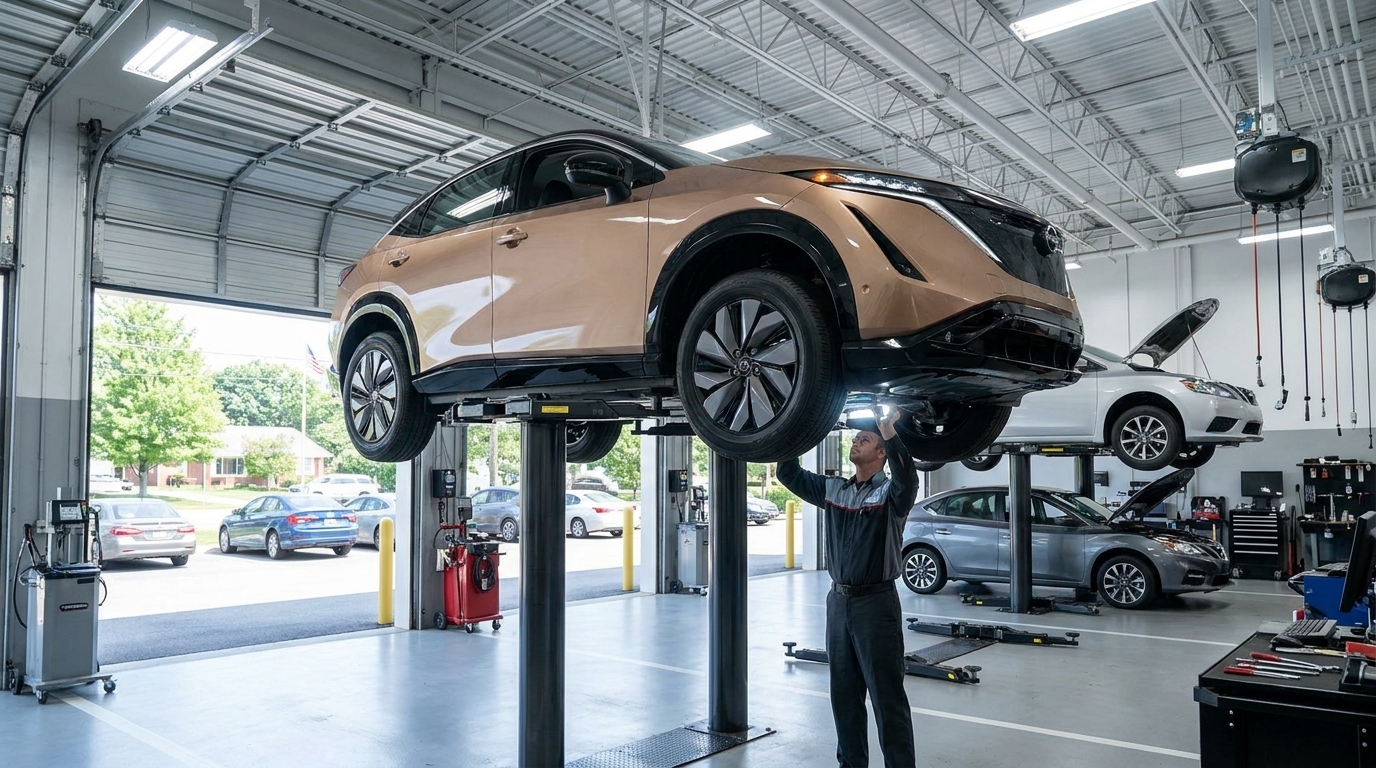
At Bommarito Nissan Ballwin, shoppers routinely compare all three on the same model — for example, a new Rogue, a leased Rogue, and a CPO Rogue from two model years earlier. Running the numbers side by side is the only way to see which structure actually fits your driving pattern and holding period.
How does Missouri sales tax change the math on each option?
Missouri imposes a 4.225% state sales/use tax on motor vehicles plus applicable local sales/use tax based on the buyer's address, administered by the Missouri Department of Revenue under RSMo §144.070. For dealer sales of new and used vehicles — including CPO — the taxable purchase price is reduced by the documented trade-in allowance, so long as the trade-in is clearly listed on the dealer invoice or title assignment. For leases, Missouri generally taxes each monthly lease payment at the applicable state and local rate, though lessors may also structure the deal as an up-front tax on total lease value.
Two practical consequences for Ballwin, MO buyers: first, a trade-in on a new or CPO purchase directly lowers your tax bill, which can be worth hundreds or more depending on trade value. Second, leases spread the tax across monthly payments instead of collecting it all at titling — which improves cash flow but doesn't automatically make a lease "cheaper" than buying.
One deadline worth respecting: vehicles must be titled in Missouri within 30 days of purchase and sales/use tax paid at that time. A $25 penalty applies on day 31, with an additional $25 per month thereafter, up to a maximum of $200.
What warranty and lemon law protections apply to each path?
New vehicles carry the full manufacturer warranty and the strongest Missouri lemon law footing. CPO vehicles sold with a remaining manufacturer's warranty may qualify for Missouri lemon law protections if the vehicle exhibits a substantial defect affecting use, safety, or value that cannot be repaired after a reasonable number of attempts — qualifying remedies include a refund or replacement vehicle, including reimbursement of purchase price and taxes. Leased vehicles retain the same new-car warranty because they are, in fact, new.
The important distinction: if a used vehicle is covered only by a dealer or third-party warranty or service contract — not a remaining manufacturer's warranty — Missouri lemon law protections may be more limited or unavailable. That's a meaningful reason to prefer a genuine manufacturer CPO program over a generic "pre-owned with warranty" listing.
How should service contracts factor into the decision?
Extended warranty and service contract companies operating in Missouri must register with the state and either maintain insurance policies backing all contracts or maintain a funded account with at least 40% of contract revenues plus a deposit of at least 5% of revenues or $25,000, whichever is greater, in trust with the state. Consumers must be given at least 20 days to cancel a service contract and receive a full refund, minus any claims already paid.
For CPO buyers, factor the existing factory-backed coverage into whether an additional service contract is worth it. For lease customers, extended coverage rarely makes sense — the vehicle is under manufacturer warranty for the entire lease term in most cases. For new-car buyers keeping the vehicle 7+ years, an extended contract can be worth pricing.
Which path fits which Ballwin, MO driver?
Use this framework as a starting point. It's directional, not absolute — your specific numbers matter.
| Buyer profile | Best-fit path | Why |
|---|---|---|
| Drives 8,000-12,000 mi/yr, wants a new vehicle every 2-3 years, values predictable payments | Lease | Lower monthly payment, always under warranty, tax spread across payments |
| Drives 15,000+ mi/yr, plans to keep the vehicle 6+ years | Buy New | Mileage penalties kill lease math; long ownership amortizes depreciation |
| Wants near-new condition at a lower price, values manufacturer warranty | Certified Pre-Owned | Avoids first-year depreciation while retaining lemon law eligibility |
| Has significant trade-in equity | Buy New or CPO | Missouri trade-in credit reduces taxable price; leases benefit less directly |
| Uncertain about long-term needs (job change, family growth, relocation) | Lease | Defined end date, no resale hassle at return |
What should Ballwin, MO buyers verify before they sign?
Before you commit, confirm four things in writing: the trade-in allowance line on your buyer's order (this is what triggers the Missouri tax credit), the total tax and title figure the dealer will remit to the Missouri DOR, the exact warranty coverage remaining or included, and the cancellation terms on any service contract you're offered. If a CPO vehicle is being marketed as such, ask which manufacturer program it's certified under and what inspection points and warranty extension come with it.
Bommarito Nissan Ballwin is a Nissan franchise dealer serving the St. Louis metro west of I-270, which means their CPO inventory runs through Nissan's factory-backed certified program — the type of manufacturer warranty that keeps Missouri lemon law protections intact. The dealership serves the St. Louis metro west of I-270 and is known for a straightforward, unhurried buying process.
Frequently asked questions
Do I pay Missouri sales tax on a leased vehicle?
Yes. Leased vehicles in Missouri are generally taxed on each monthly lease payment at the 4.225% state rate plus applicable local sales/use tax, administered under RSMo §144.070. Lessors may alternatively structure the transaction as an up-front tax on the total lease value. Either way, the tax is legally required — it's just a question of timing and cash flow.
Does Missouri give a trade-in tax credit on a CPO purchase?
Yes. For dealer sales of new and used vehicles — CPO included — the taxable purchase price is reduced by the documented trade-in allowance. The trade-in value must be clearly listed on the dealer invoice or title assignment for the credit to apply. This can meaningfully reduce your tax bill compared to selling the trade-in privately and buying separately.
Is a certified pre-owned vehicle covered by Missouri's lemon law?
CPO vehicles sold with a remaining manufacturer's warranty may qualify for Missouri lemon law protections if the vehicle has a substantial defect affecting use, safety, or value that cannot be repaired after a reasonable number of attempts. Remedies can include a refund or replacement vehicle, including reimbursement of purchase price and taxes. Coverage is weaker if only a dealer or third-party warranty applies.
How long do I have to title a vehicle in Missouri after purchase?
You must title a vehicle in Missouri within 30 days of purchase and pay sales/use tax at that time. A $25 penalty applies on day 31, with an additional $25 per month thereafter, capped at a $200 maximum. Missing the window is one of the more avoidable costs in a car purchase, so calendar the deadline the day you sign.
What happens if I bought the car in another state?
If sales/use tax was legally paid to another state, Missouri provides a credit against Missouri use tax up to the Missouri amount owed under RSMo §144.070. If Missouri's combined state and local rate exceeds the rate you paid elsewhere, you owe the difference at Missouri titling. Bring proof of tax paid to the DOR to claim the credit.
Can I cancel an extended warranty or service contract in Missouri?
Yes. Missouri's service contract regulation requires that consumers be given at least 20 days to cancel a service contract and receive a full refund, minus any claims already paid. If a provider refuses to honor cancellation or refund terms, complaints can be filed with the Missouri Attorney General's Office, which enforces consumer protection laws covering warranties and service contracts.
Is leasing or buying better if I drive a lot for work?
Buying — new or CPO — is usually better for high-mileage drivers. Standard leases cap annual mileage (commonly 10,000-15,000) and charge per-mile penalties on excess miles at lease end. If you're consistently driving 15,000+ miles a year in the Ballwin and St. Louis metro area, ownership avoids those penalties and lets you amortize the vehicle over its useful life.
A closing note
The right path isn't the same for every buyer, and it rarely comes down to sticker price alone. Missouri's tax treatment, the trade-in credit, warranty rights, and your own driving pattern all move the answer. Readers in the Ballwin, MO area who want to run new, lease, and CPO numbers on the same model with someone who can pull the actual Missouri tax and title figures can reach Bommarito Nissan Ballwin at https://www.bommaritonissanballwin.com/ to work through the comparison. Nothing in this guide is legal or tax advice — for transaction-specific questions, the Missouri Department of Revenue and a qualified Missouri tax professional are the authoritative sources.